
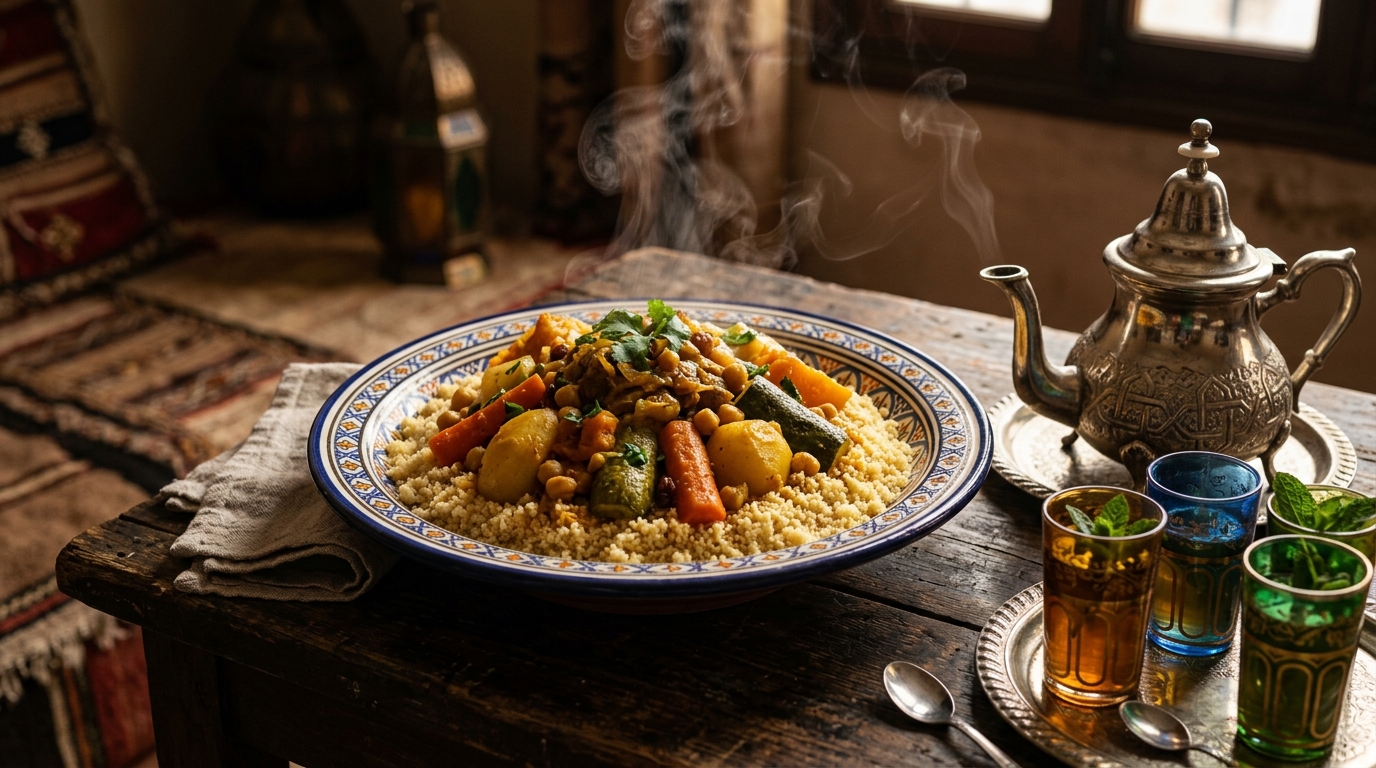
Moroccan Couscous Recipe
The Moroccan Couscous Recipe is one of Morocco’s most iconic and cherished dishes. Traditionally prepared every Friday for family gatherings, this hearty meal combines fluffy steamed couscous with tender meat, chickpeas, and seven colorful vegetables, all simmered in a fragrant broth seasoned with authentic Moroccan spices.
The authentic Moroccan Couscous Recipe represents generosity, hospitality, and centuries of culinary tradition. Every region of Morocco has its own variation, but the classic version with seven vegetables remains the most famous. Whether served during family lunches, holidays, or special celebrations, this comforting dish brings everyone together around one large serving platter.
If you want to experience authentic Moroccan cooking, learning the Moroccan Couscous Recipe is an essential first step.
Health Benefits of Moroccan Couscous Recipe
Rich in Protein
Lamb or beef provides high-quality protein that supports muscle growth and repair.
High in Fiber
The vegetables and chickpeas contribute dietary fiber that supports healthy digestion and promotes fullness.
Packed with Vitamins
Carrots, zucchini, pumpkin, cabbage, tomatoes, and turnips provide vitamins A, C, K, potassium, and antioxidants.
Balanced Meal
The Moroccan Couscous Recipe combines carbohydrates, protein, healthy fats, and vegetables into one complete meal.
History of Moroccan Couscous Recipe
The Moroccan Couscous Recipe has been a staple of Moroccan cuisine for centuries. Historians trace couscous back to the Amazigh (Berber) people of North Africa, who traditionally hand-rolled semolina into tiny granules before steaming them.
Friday couscous became a long-standing Moroccan tradition because families gathered after the weekly prayer to share a generous meal. Today, couscous remains one of Morocco’s national dishes and is enjoyed around the world.
Ingredients for Moroccan Couscous Recipe
For the Meat and Broth
- 1 kg lamb or beef
- 2 onions, chopped
- 2 tomatoes, grated
- 2 tablespoons olive oil
- 1 teaspoon turmeric
- 1 teaspoon ginger
- 1 teaspoon black pepper
- 1 teaspoon paprika
- Salt to taste
- Fresh parsley
- Fresh cilantro
- 2 liters water
Seven Traditional Vegetables
- 2 carrots
- 2 zucchini
- 2 turnips
- 1 small cabbage
- 1 sweet potato or pumpkin
- 1 cup chickpeas
- 1 onion
Couscous
- 500 g Moroccan couscous
- 2 tablespoons olive oil
- 1 tablespoon butter
- Salt
How to Make Moroccan Couscous Recipe
Step 1 – Prepare the Broth
Heat olive oil in a large couscous pot. Add onions, meat, tomatoes, parsley, cilantro, turmeric, ginger, paprika, black pepper, and salt. Cook for several minutes before adding water.
Step 2 – Simmer the Meat
Allow the meat to simmer for about one hour until partially tender.
Step 3 – Add the Vegetables
Add the carrots, turnips, cabbage, pumpkin, zucchini, onions, and chickpeas to the broth. Continue cooking until everything is tender.
Step 4 – Steam the Couscous
Lightly coat the couscous with olive oil and steam it over the broth for about 20 minutes. Repeat the steaming process two more times, fluffing the couscous with water and salt between each steaming.
Step 5 – Finish the Couscous
Mix butter into the steamed couscous until light and fluffy.
Step 6 – Assemble the Dish
Place the couscous onto a large serving platter. Arrange the meat in the center and surround it with the vegetables.
Step 7 – Add the Broth
Ladle the flavorful broth generously over the couscous before serving.
Expert Tips for Moroccan Couscous Recipe
- Steam the couscous three times for the traditional light texture.
- Use fresh seasonal vegetables whenever possible.
- Do not overcook the zucchini.
- Let the broth simmer slowly to develop deeper flavor.
- Serve immediately while hot.
Common Mistakes
Many beginners skip the multiple steaming process, resulting in dense couscous.
Adding all vegetables at the same time may overcook delicate vegetables like zucchini.
Using too much broth can make the couscous soggy.
Serving Suggestions
The Moroccan Couscous Recipe pairs perfectly with:
- Moroccan Mint Tea
- Fresh Moroccan Bread
- Harissa (optional)
- Fresh tomato and cucumber salad
- Buttermilk (Lben)
Storage Tips
Store leftover Moroccan Couscous Recipe in separate airtight containers for the couscous and broth. Refrigerate for up to four days.
Reheat the broth separately before pouring it over freshly steamed couscous.
The broth freezes well for up to three months.
Frequently Asked Questions
Why is Moroccan couscous traditionally served on Fridays?
Friday is an important family day in Morocco, and couscous has become the traditional meal shared after the weekly prayer.
Can I make couscous without meat?
Yes. You can prepare a delicious vegetarian version using only vegetables and chickpeas.
How many times should couscous be steamed?
Authentic Moroccan couscous is traditionally steamed three times to achieve its light, fluffy texture.
What vegetables are traditionally used?
The classic Moroccan Couscous Recipe includes carrots, zucchini, turnips, cabbage, pumpkin, onions, and chickpeas.
Why You’ll Love Moroccan Couscous Recipe
The Moroccan Couscous Recipe is more than just a meal—it’s a symbol of Moroccan culture, hospitality, and family traditions. With its fluffy couscous, slow-cooked meat, colorful vegetables, and aromatic broth, this timeless recipe delivers comfort, nutrition, and unforgettable flavor in every bite. Whether you’re cooking for a celebration or a family lunch, this authentic dish is sure to impress.
Leave a Reply