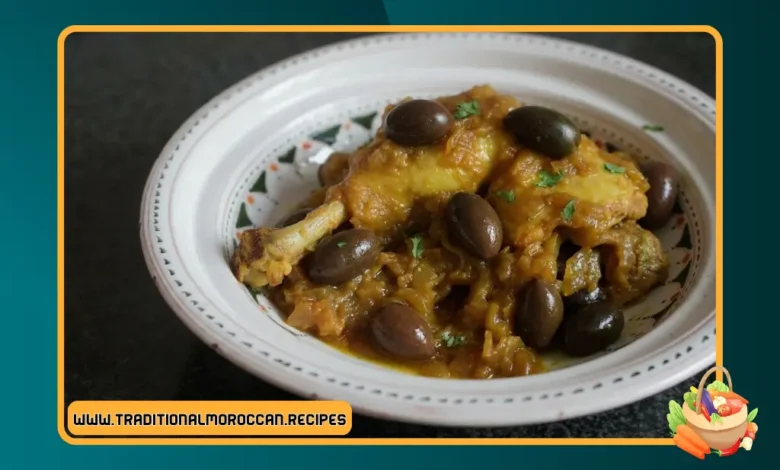
There is a specific dish in Morocco that defines “home.” For many, it is Chicken Mkalli (also spelled Djaj Mqualli). This isn’t just a recipe; it’s a welcoming ceremony. Whether you are a student returning from university or a guest entering a Moroccan home for the first time, this golden, saffron-infused tagine is the ultimate sign of hospitality.
The magic of this dish lies not just in the tender chicken, but in the Daghmira—the thick, jammy, caramelized onion sauce that remains at the bottom of the pot. It is savory, tangy, and deeply aromatic. In this guide, we will explore the traditional secrets of mastering this masterpiece, from the science of the sauce to the medicinal history of its spices.
Nutritional & Medical Benefits: The Healing Power of the Tagine
Beyond the incredible flavor, the ingredients in Chicken Mkalli offer significant health benefits, making it a “functional food” in the Mediterranean and North African diet.
1. Preserved Lemons: The Probiotic Edge
Traditional Moroccan preserved lemons are fermented in salt and their own juices for weeks. This fermentation process creates beneficial bacteria (probiotics) that support gut health. Additionally, the lemon peel is rich in limonene, a compound studied for its potential anti-inflammatory and antioxidant properties.
2. Ginger and Turmeric: The Anti-Inflammatory Duo
This recipe relies heavily on ground ginger and turmeric. Curcumin (found in turmeric) is one of the most powerful natural anti-inflammatories known to science. When combined with the black pepper in this recipe, the absorption of curcumin is increased by up to 2,000%, aiding in joint health and reducing systemic inflammation.
3. Saffron and Emotional Well-being
Saffron is known in traditional Moroccan herbalism as the “sunshine spice.” Modern research suggests that saffron may help elevate mood and reduce symptoms of anxiety by affecting serotonin levels in the brain.
4. Onions: A Prebiotic Powerhouse
Using 800g of onions isn’t just for flavor; onions are loaded with quercetin, a flavonoid that supports heart health and immune function. As a prebiotic, cooked onions feed the good bacteria in your microbiome.
The Secret of “Mkalli”: Understanding the Sauce
In Moroccan Arabic, Mqualli refers to a specific style of cooking where the sauce is reduced until the onions become a thick, concentrated paste. Unlike western stews which are “soupy,” a perfect Mkalli has a sauce that “clings” to the bread. The goal is to reach a stage where the oil separates slightly from the onion mass—this is when you know the flavor has reached its peak.
Ingredients: The Golden List
The Poultry
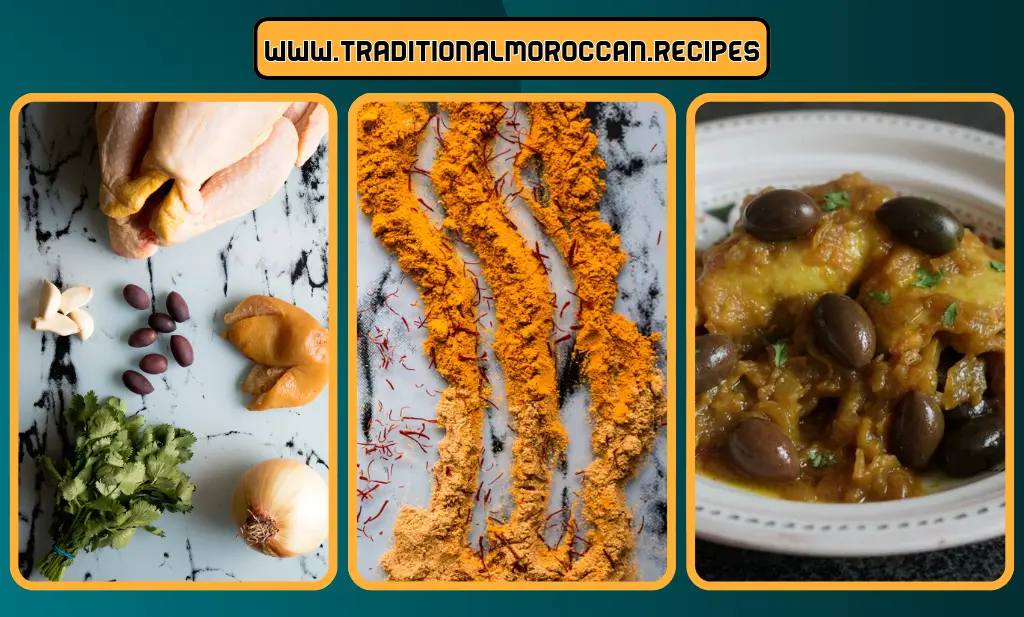
- 1.2kg Chicken: You can use a whole chicken cut into pieces (traditional) or 1.2kg of chicken legs and thighs. Skin-on is preferred as it adds richness to the Daghmira.
The Aromatics & Spices
- 2 tbsp Olive Oil: The base of the sauté.
- 4 Large Onions (800g): Do not be tempted to use fewer; the onions are the sauce.
- 1 tbsp Chopped Garlic: About 4 cloves.
- 1 tsp Ground Turmeric: For that iconic golden color.
- 1 tsp Ground Ginger: For a warm, citrusy heat.
- 1 tsp Salt: (Use carefully, as preserved lemons and olives are salty).
- ¼ tsp Ground Black Pepper: To activate the turmeric.
- A Generous Pinch of Saffron: Real Moroccan saffron threads are best.
The “Moroccan” Elements
- 1 Large Coriander Bouquet: Tied with kitchen string. We want the flavor, but not the leaves floating in the final sauce.
- 2 Medium Preserved Lemons: The “soul” of the dish.
- 150g Red-Brown Olives: Preferably Kalamata or Moroccan Meslalla olives.
Step-by-Step Culinary Method
1. Sweating the Onions
In a large casserole or heavy-bottomed pot, heat the olive oil over medium heat. Add the chopped onions. Cover with a lid and let them “sweat” for 10 minutes. This slow-cooking method draws out the natural sugars without browning them too quickly, creating a sweet foundation for the sauce.
2. Browning the Chicken
Add the chicken pieces, garlic, turmeric, ginger, salt, pepper, and saffron. Turn the chicken occasionally for 10-15 minutes. You aren’t looking for a deep sear, but rather a “light tan” that allows the meat to absorb the dry spices and garlic.
3. The Long Simmer
Pour in one cup of water (240ml). Place the coriander bouquet on top of the chicken. Bring to a boil, then reduce the heat to medium-low. Cover and simmer for 50 minutes. The chicken should be so tender it nearly falls off the bone.
4. Preparing the Lemons
While the chicken simmers, take your preserved lemons. Remove the pulp (flesh) and discard it (or keep it for the beginning of the next recipe as a flavor booster). Finely chop the rind. This rind contains the concentrated essential oils that give the tagine its punch.
5. The Reduction (The Most Important Step)
Once the chicken is cooked, remove it from the pot and discard the coriander bouquet. Now, increase the heat to medium. Let the onion sauce simmer uncovered for about 20 minutes. Stir occasionally. You are watching the water evaporate until the onions become a thick, jammy “Daghmira.” If it gets too dry, add 2 tablespoons of water.
6. The Final Infusion
Add the chopped preserved lemon rind and the olives to the onion sauce. Stir and leave on low heat for 10 minutes. This allows the olives to plump up and the lemon oils to fuse with the onions.
7. Serving
Return the chicken to the pot just to warm it through. Serve in a shallow dish or a tagine, placing the chicken in the center and smothering it with the rich, olive-laden onion sauce.
Variations: To Fry or Not to Fry?
In many Moroccan cities, especially at weddings, this dish is served with French Fries piled high on top. The saltiness of the fries dipped in the lemon sauce is a revelation. However, for a healthier or more traditional approach, serve it with:
- Fresh Moroccan Bread (Khobz): The only true way to eat the sauce.
- Couscous or Brown Rice: Excellent for soaking up every drop of the Mqualli.
Expert Tips
- Pro Tip (The Liver Secret): If your chicken came with the liver, don’t throw it away! Sauté it separately, mash it, and stir it into the onion sauce at the end. It adds an incredible depth of flavor known only to professional Moroccan chefs.
- Salt Control: Because preserved lemons and olives are cured in salt, always under-salt your chicken at the start. You can always add more at the end.
Frequently Asked Questions (FAQ)
Can I use fresh lemons instead of preserved lemons?
No. Fresh lemons are acidic and tart, whereas preserved lemons are salty, floral, and “umami.” The taste profile is completely different. If you don’t have preserved lemons, it’s better to make a different dish!
My sauce is too watery, what did I do wrong?
You likely didn’t reduce the sauce long enough after removing the chicken. Don’t be afraid to turn up the heat and stir until the onions become a thick paste.
Is this dish spicy?
No, it is fragrant and warm due to the ginger and saffron, but it contains no chili heat. It is very kid-friendly!